
cataract canyon
Just below the confluence between the Green and Colorado Rivers lies Cataract Canyon. Here, the Colorado River winds through the heart of Canyonlands National Park and features some of the most challenging rapids on the Colorado Plateau.
Over the last decade, Cat has changed dramatically due to the fall of Lake Powell. Returning Rapids monitors the movement of sediment through Cataract Canyon, the unstable Dominy Sediment Formation, and the re-emergence of some of the legendary rapids within the corridor.
Returning Rapids studies many side canyons and features found along cataract canyon
Returned Rapids
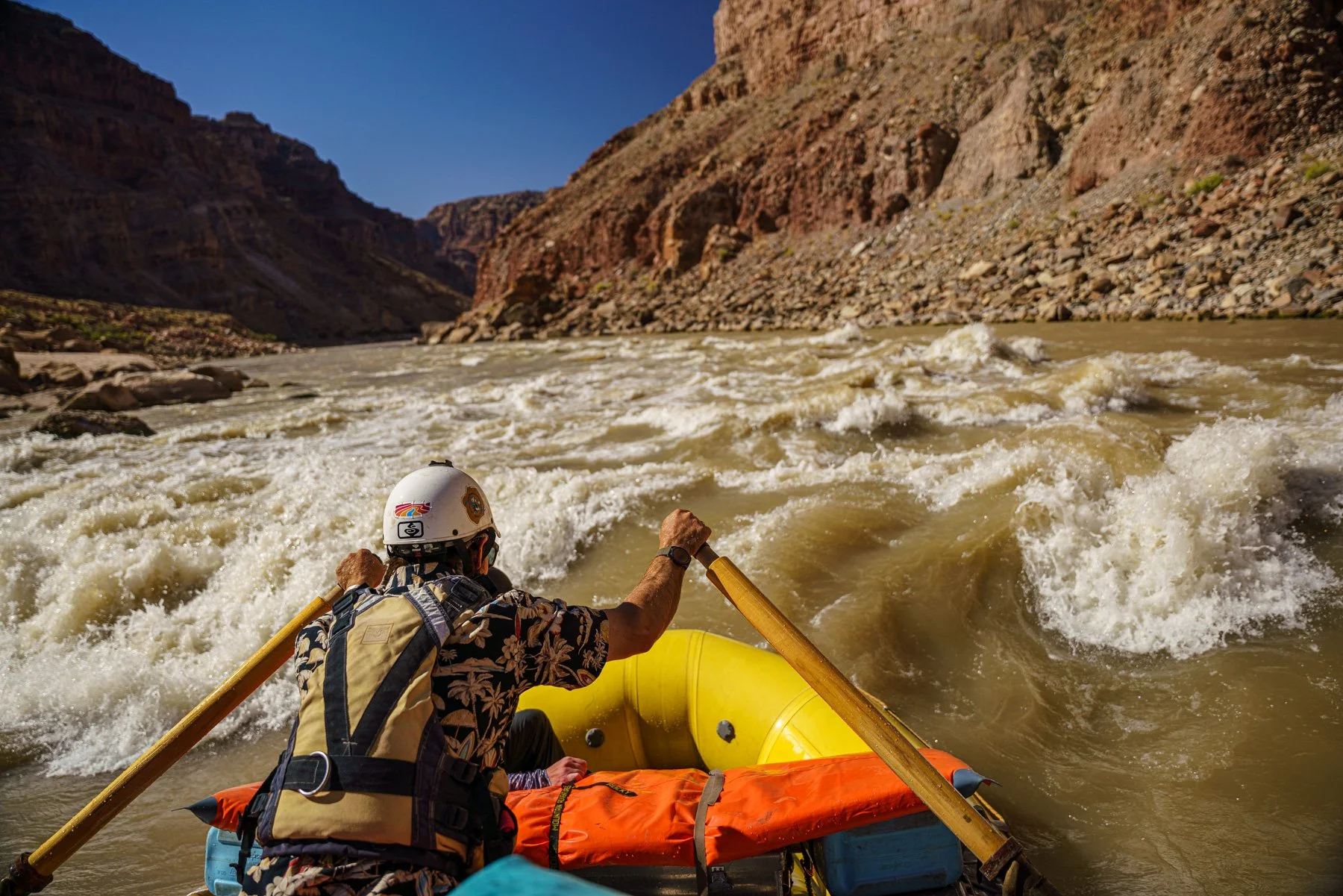
During the low water of 2018, disturbances began to show in the current as the river flowed over the historic location of Gypsum Canyon Rapid. The 2019 high water may have further scoured out the sediment that buried Gypsum Canyon Rapid. When the reservoir dropped and we had a chance to see it in February 2020, it had definitely changed.
Since then, Gypsum has become a significant rapid! We’ve also seen the return of other legendary rapids such as Waterhole, Imperial, the Chute, and others.
We’ve also started noticing some riffles emerging at the mouth of Palmer Canyon where historical record indicates another rapid… don’t worry, we’ve got our eyes on that one as well.

Side Canyon Restoration
The many side canyons that run into Cataract Canyon that tell the story of the river’s restoration. As the lake level drops, a steeper gradient causes the river to move faster.
As the river speeds up, sediment conveyor belts start firing up again, and the process of Dominy evacuation from these side canyons picks up speed.
Clearwater, Dark, Waterhole, Bowdie, and others are all showing signs of restoration as the Dominy sediment continues to evacuate.
As more and more sediment evacuates from the mouths of these canyons, we are seeing “teeth” - the natural bedrock - start to poke through!
The Dominy FOrmation
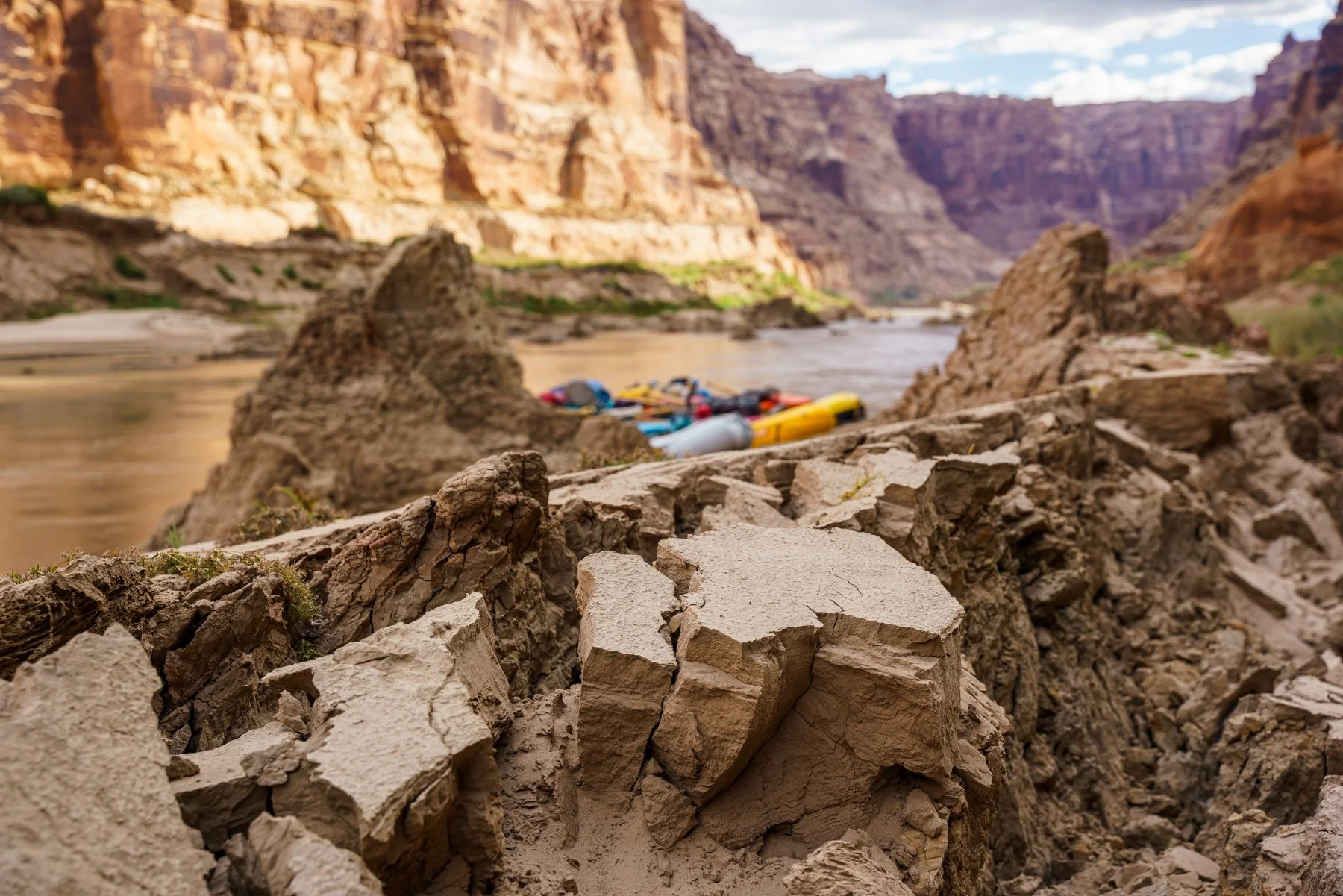
At its height, Lake Powell filled the Colorado River Corridor all the way up to the foot of Big Drop 3 - one of Cat’s most legendary rapids.
From here, lake-deposited sediment starts to become visible. This unstable depositional formation is called the Dominy Formation, and it serves as a reminder that these areas were once underwater.
The Dominy layer is particularly unstable - even for a mudstone - and has several unique geological properties.
“Someday! Yes, in geologic time, maybe. Lake Powell will fill up with silt. I don’t know how many thousands of years from now!” - Floyd Dominy
Cataract Caynon trip reports and studies
-
![]()
Gypsum Rapid
During the high water of 2020, 2 - 3 feet worth of sediment was evacuated. Once the river dropped again, Gypsum started to show some teeth…
-
![]()
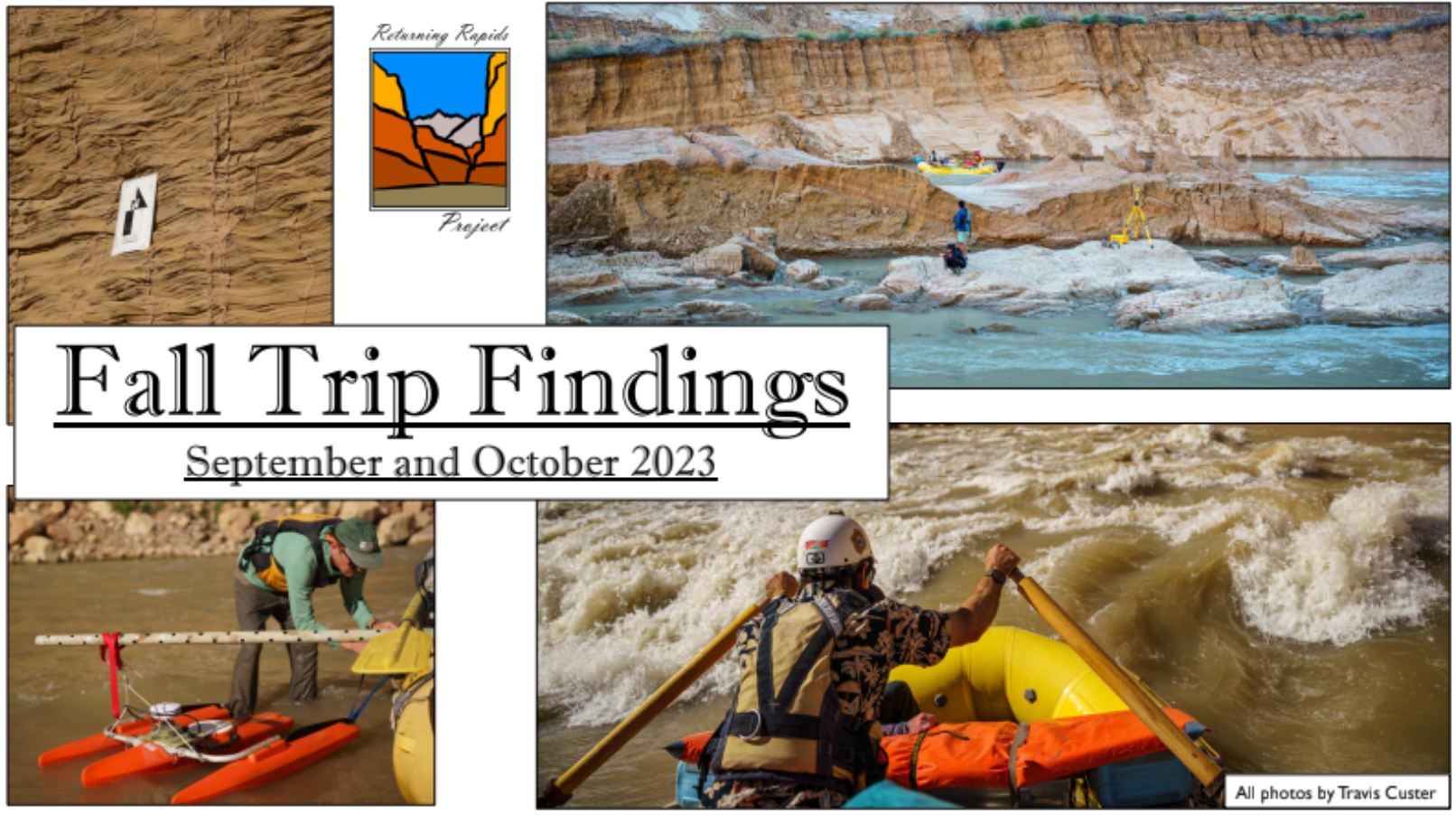
Fall 2023: Trip Report
A high runoff year scoured the river at an unprecedented rate, causing the area’s largest single sediment slumping event ever recorded.
-
![]()
September 2021: USGS Survey, 100 years later
Repeat photography, establishing survey points, and documenting changes after a large monsoon season.
-
![]()
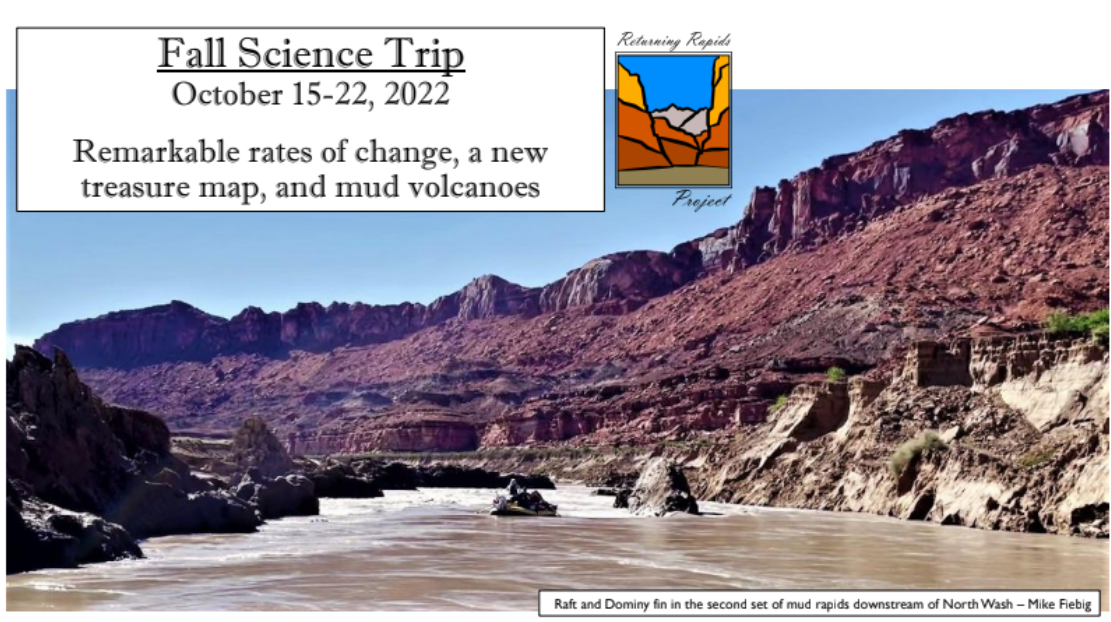
October 2022: Fall Science Trip
The monsoons of August and September 2022 caused a great deal of change from Rapid 12 through Big Drop 1.
-
![]()
October 2021: Fall Science Trip
A study of Mud.
In October 2021, a diversely skilled team of scientists, river advocates, and river runners set out to understand how the river is trying to regain balance with its sediment load.
-
![]()
July 2021: Cataract and across the delta
A photographic study of changes at the perched river and boat ramp comparisons.
-
![]()
October 2020: Fall Science Trip
Description goes A wide array of perspectives and disciplines came together to take a trip through Cataract Canyon and examine the changes taking place here.
-
![]()
Clearwater Canyon
Its simple beauty has long been noted and recorded since Powell’s expeditions. Clearwater is rapidly changing as sediment begins to evacuate more quickly
-
![]()
Dark Canyon
The largest tributary to the Colorado River through Cataract Canyon used to create one of the fiercest rapids on the entire run through the Colorado… Will Dark Canyon Rapid return?
-
![]()
Palmer Canyon
As the river passes Palmer Canyon, it flows over a historic rapid. If sediments continue to evacuate, these ripples could be the beginning of something bigger
-
![]()
Returned Rapids
It may be time to update your map with the addition of several returned rapids whose teeth are fully out with the continued evacuation of sediment!


Our research is supported by individual donors who believe in the importance of monitoring and publishing river based science on these rapidly changing areas.